Math that makes sense.
Patterns and logic, not memorized steps. The Tigard Method is discovery-based math and reading, developed over 25+ years with students who learn differently — which is why it works for every learner.
Pattern · Logic · Discovery
You know this kid.
The one who “knows the material” and still freezes on the test. The one who counts on fingers in fourth grade and hides it. The one who has already decided, at eight years old, “I’m just bad at math.”
None of those kids are bad at math. They were handed steps to memorize before anyone showed them the pattern underneath — and steps without a pattern don’t hold up under pressure.
Kids find the pattern before they’re told the rule.
Every Tigard Method lesson starts with a discovery, not a procedure. The student notices something, tests it, and names it — and once you have found a pattern yourself, you know it. Two examples from the books:
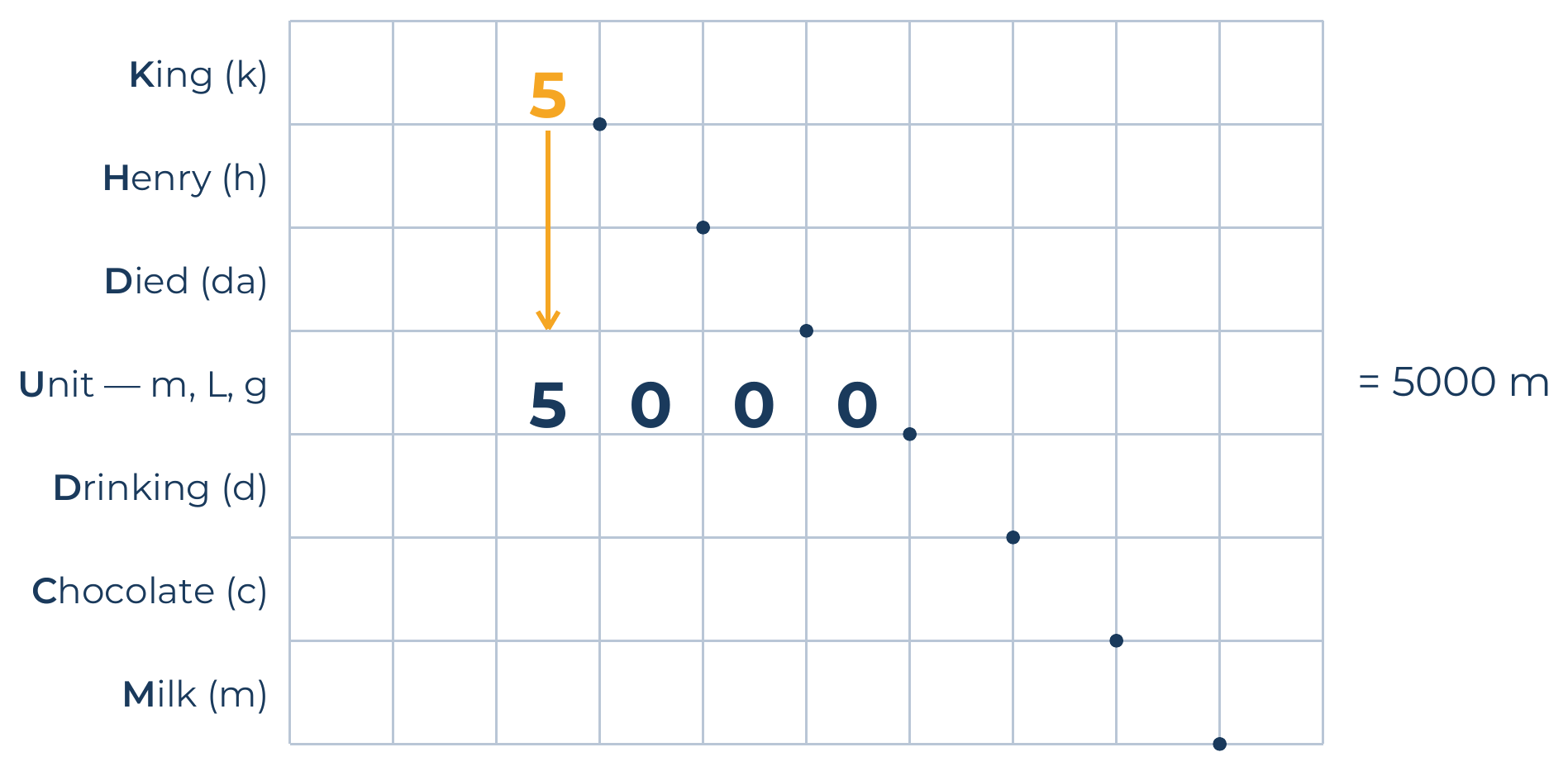
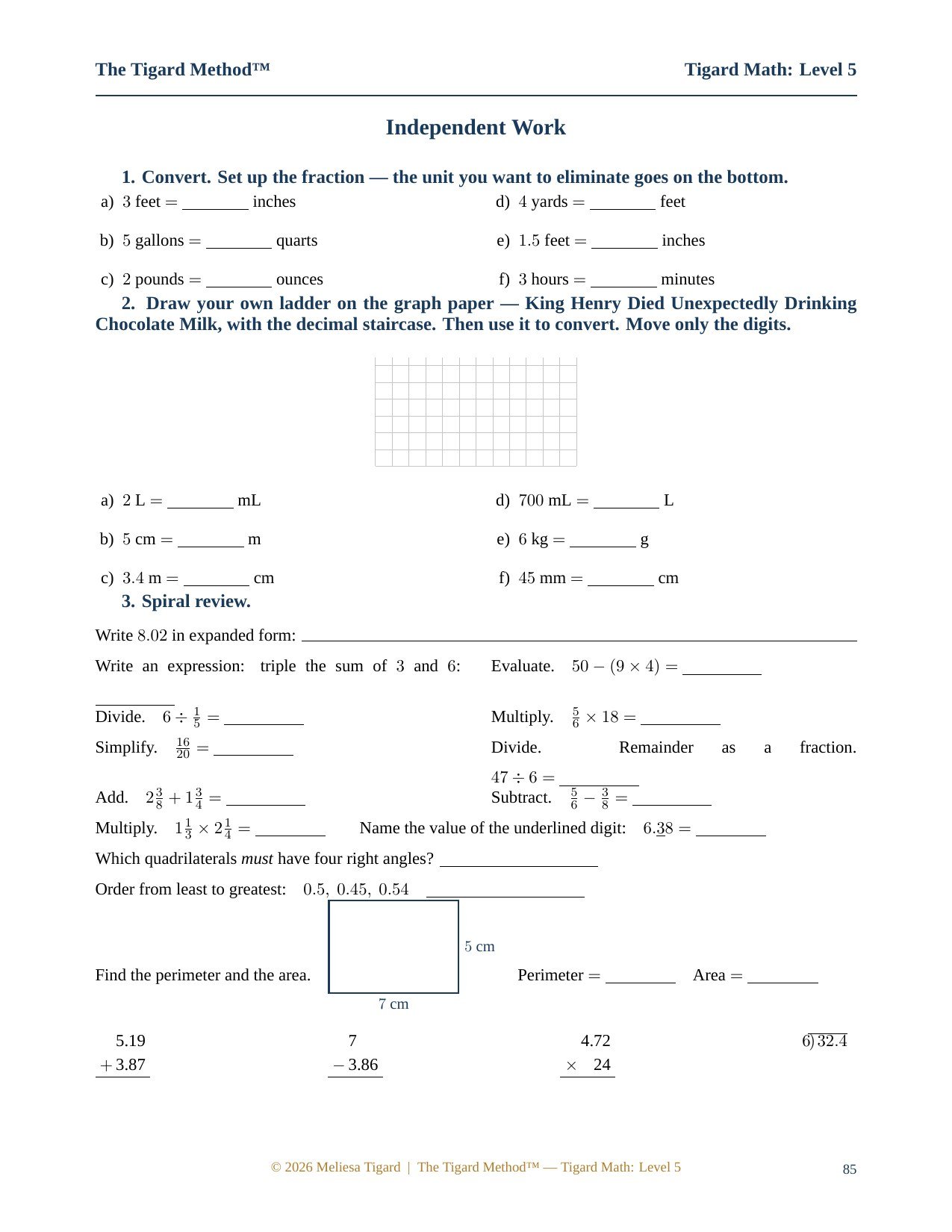
The Tigard Ladder — metric conversion
Every other method says “move the decimal point.” The Tigard Ladder does the opposite: the decimal point is printed and never moves. The digits step up and down the ladder instead. Watch a student convert 3.5 km to meters without a single rule to remember.
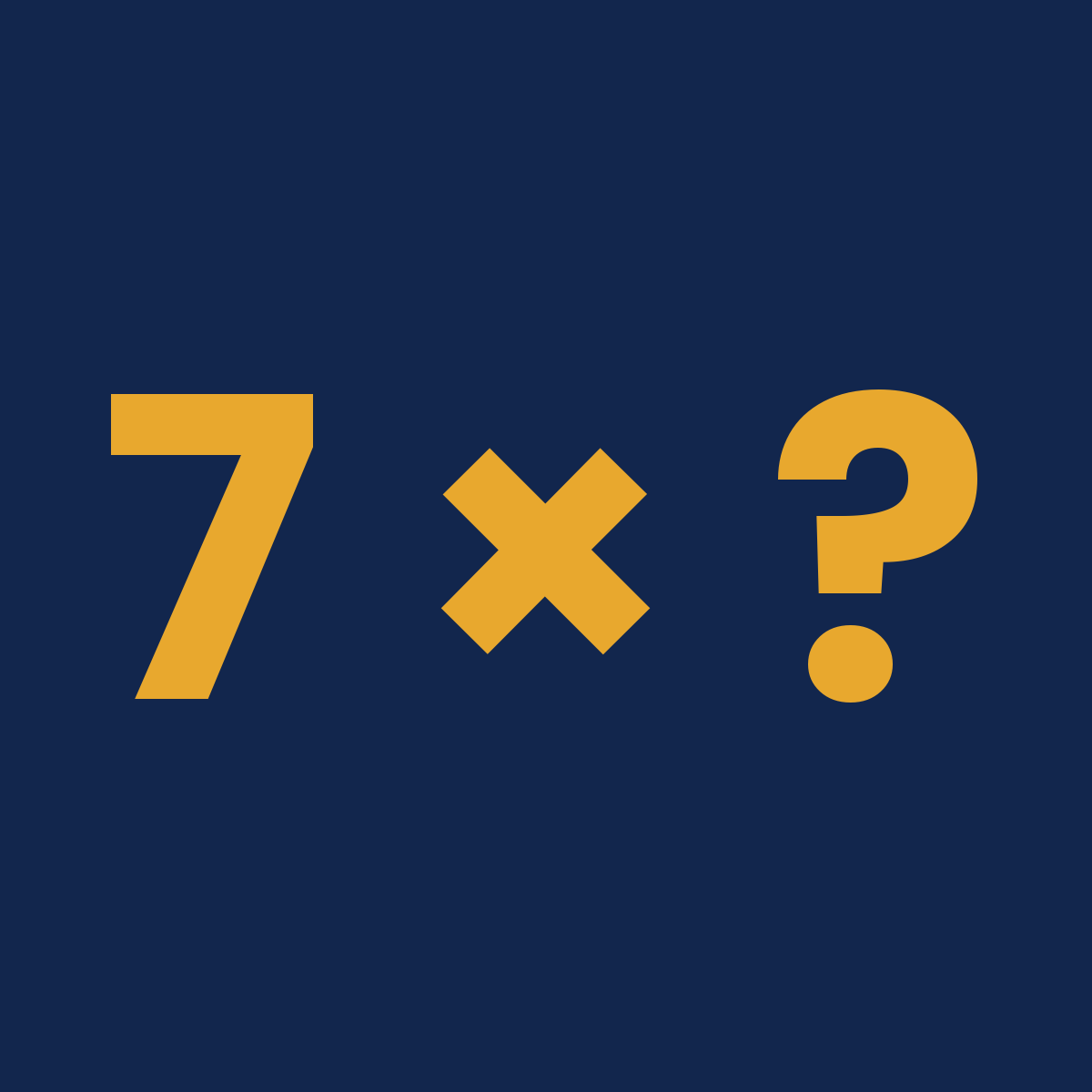
The 7s and 3s — multiplication
The sevens — the table every kid dreads — hide a code. A student who cracks it counts to any seven fact with nothing memorized: 7, 14, 21, all the way to 70, found, not recalled. And the 3s run the very same code in reverse. The code, the pairing, and why it works are in the books.
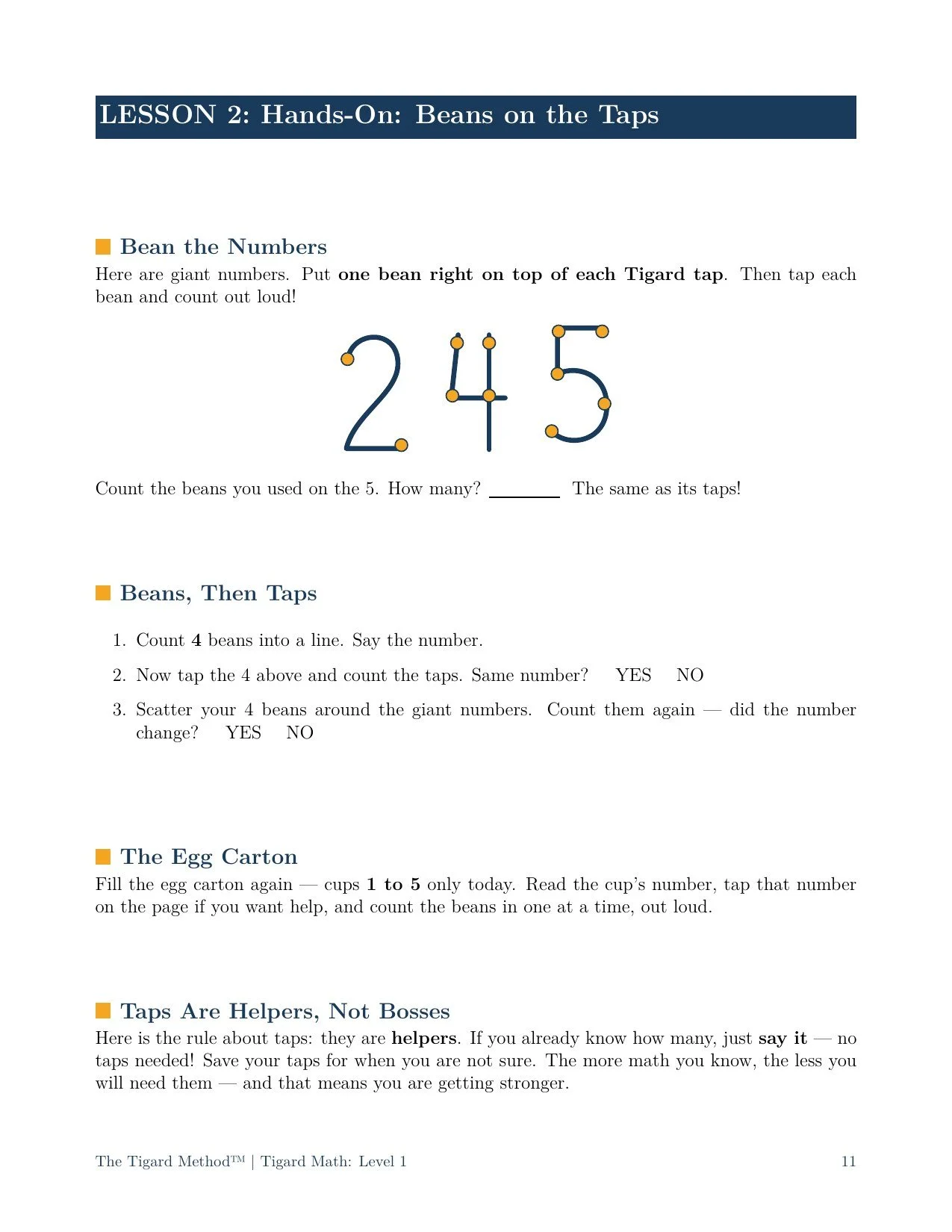
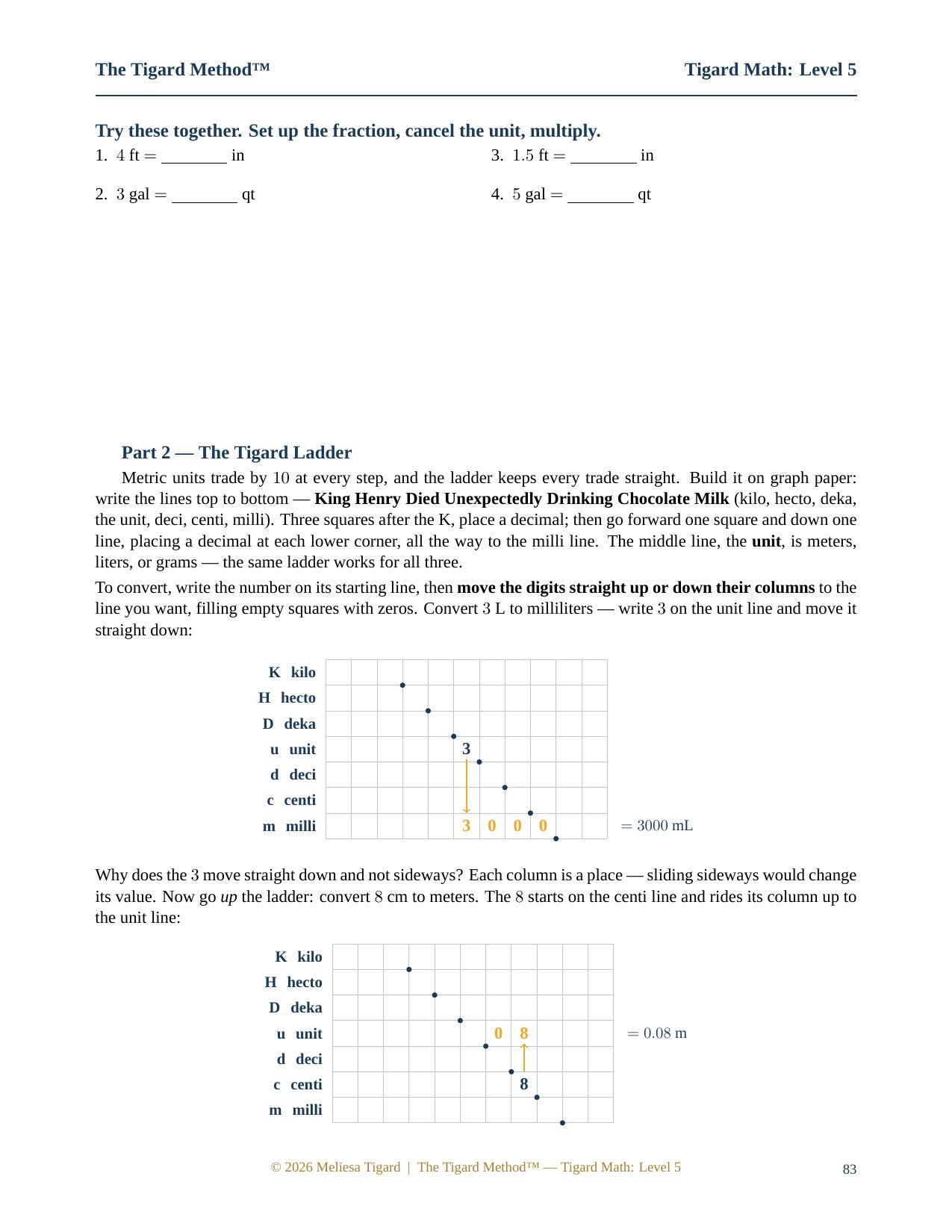
See a lesson before you buy one.
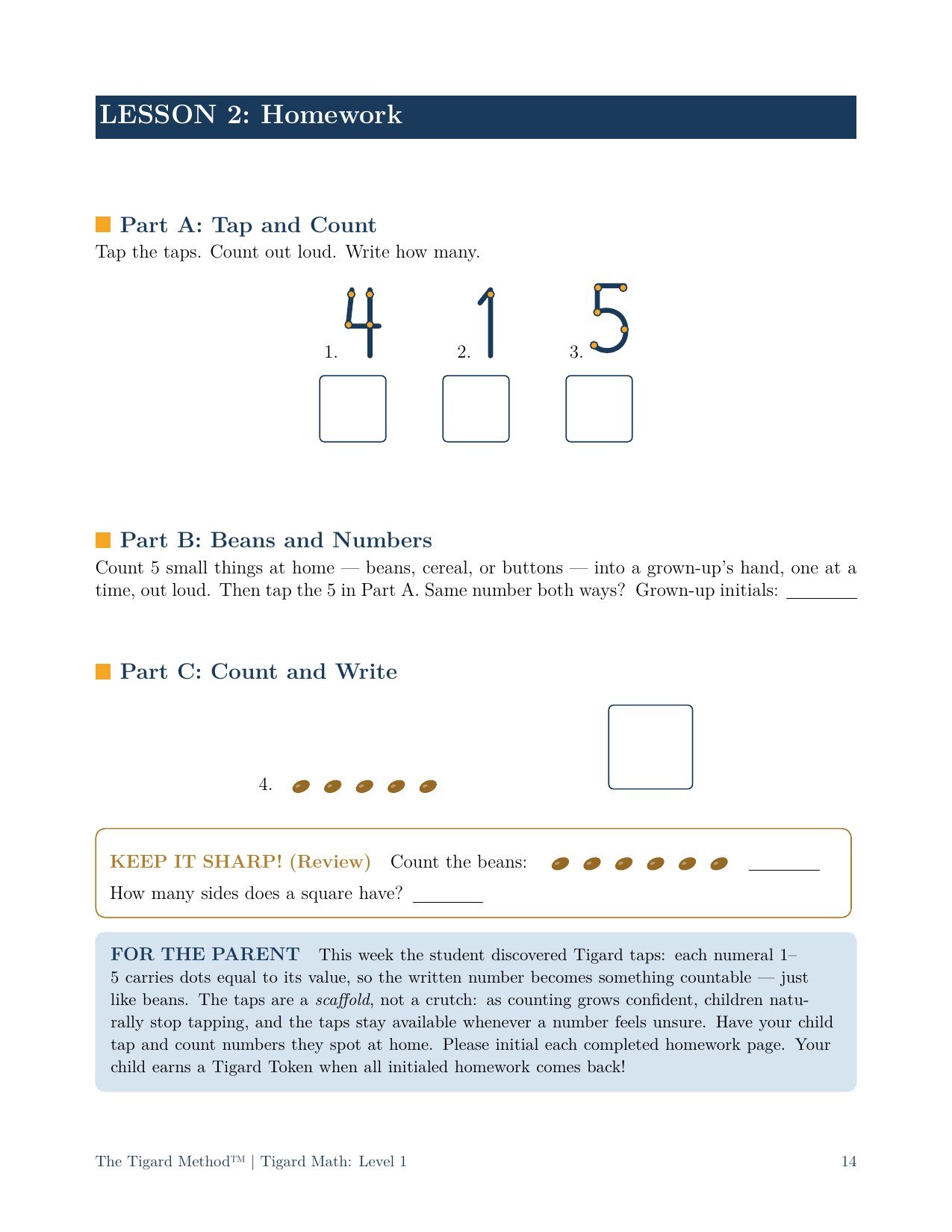
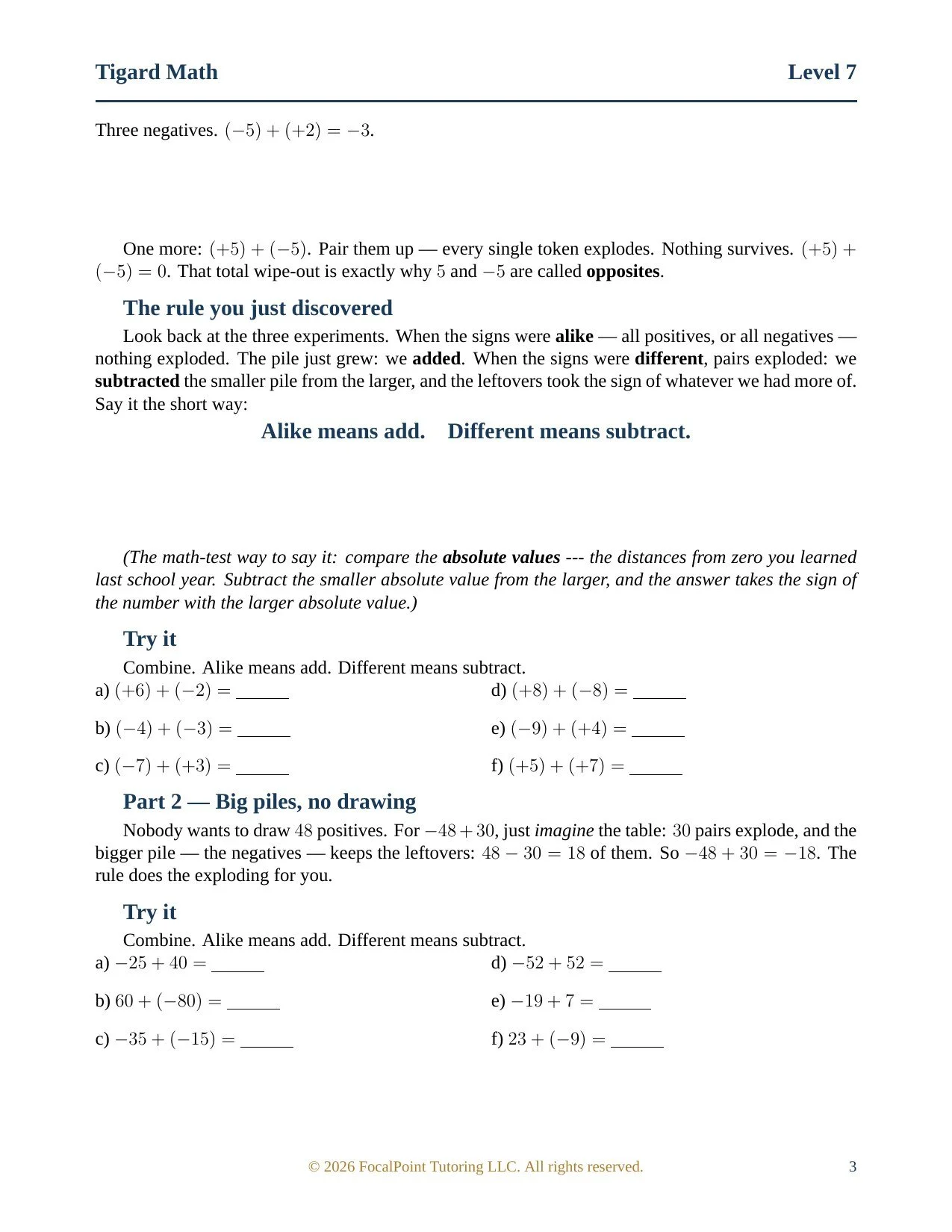
Every lesson follows the same six-page shape — a teaching page, a hands-on game, two pages of independent work, homework with a note for the grown-up, and the answer key. No special materials: dried beans, an egg carton, a die, and some coins.
The result, in one number
93%
accuracy on multiplication facts 0–12 — answered in under three seconds.
Measured on written assessments. Over more than 20 years. Across hundreds of students at FocalPoint Tutoring.
That’s the average student. Not the star. The average.
And the three seconds is the part that matters. A child who eventually gets to 7 × 8 by counting up on their fingers has not learned multiplication — they’ve learned a workaround that will collapse the moment the numbers get bigger. Under three seconds means the fact is there, instantly, with working memory left over to actually think about the problem in front of them. That’s the difference between a fourth grader who can learn long division and one who spends the whole year drowning in it.
Students don’t get told the nines. They discover them — on a Math Map, counting from zero, watching a pattern emerge that they found themselves. Then they prove it. Then they state it. Ask, discover, prove, state — every single lesson, every single table.
Along the way they build three anchors (×1, ×5, ×10) that turn every “I don’t know it” into a two-step problem they can solve. A child who blanks on 7 × 8 doesn’t freeze anymore. They land on the anchor and count. That’s not a crutch — that’s a strategy, and it’s the same strategy that will rescue them in Algebra I when the formula won’t come.
This is not memorization with extra steps. This is teaching children to think like mathematicians — at eight years old.
Built at a tutoring table, not a conference table.
Meliesa Tigard has run FocalPoint Tutoring in Wenatchee, Washington since 1999. The Tigard Method came out of those years — sitting next to students with dyslexia, ADHD, and dyscalculia, and figuring out what actually made math stick for them. It turned out to be the same thing that makes it stick for everyone: find the pattern first. Every lesson in these books was tested on real kids before it was printed. The method is now the curriculum FocalPoint’s own teachers use every day.

Tigard Math, Levels K–7
Every level as a digital download, delivered instantly. Coming next: Pre-Algebra through Pre-Calculus.